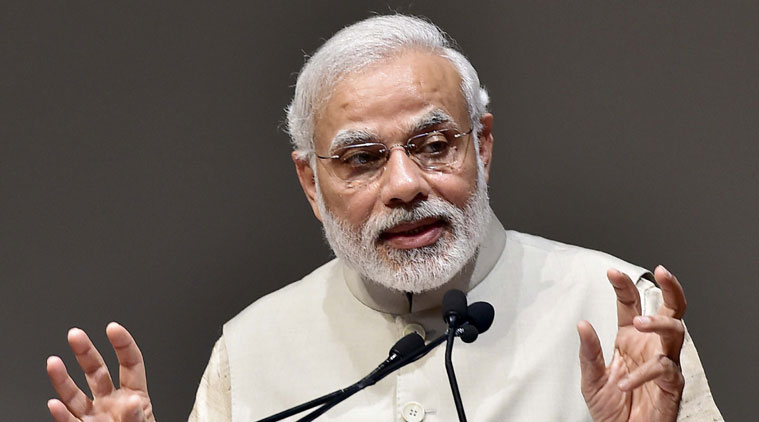
Prime Minister Narendra Modi has scored a big win for India’s bid to be admitted to the Nuclear Suppliers Group or NSG, a 48-member club of nuclear trading nations.
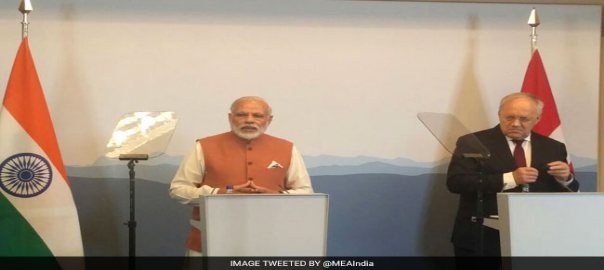
After a meeting with Mr Modi in Geneva today, Swiss President Johann Schneider-Ammann, said, “We have promised India support in its efforts to become a member of NSG.”
India has been shut out for decades from the NSG because of its refusal to sign the Nuclear Non-Proliferation Treaty while it developed its nuclear technology.
In the meantime, a civil nuclear agreement with the United States, signed in 2008, has given India access to foreign suppliers without giving up its arms or slowing down its nuclear programme.
This week, when Prime Minister Modi meets President Barack Obama for the seventh time in two years, they will discuss India’s route to the NSG. President Obama and his administration officials have said that they backed India’s desire to join the group, but the idea faces resistance from China.
The Prime Minister, who is visiting a series of countries currently, added Mexico and Switzerland to his itinerary because both had expressed reservations about India being included in the NSG after Delhi applied for membership last month.
Later this month, a big session of the NSG will take place in Seoul and the PM wanted to ensure that India’s lobbying was handled at the top level before its application is reviewed in detail.
Even one country’s vote against India will block its bid.
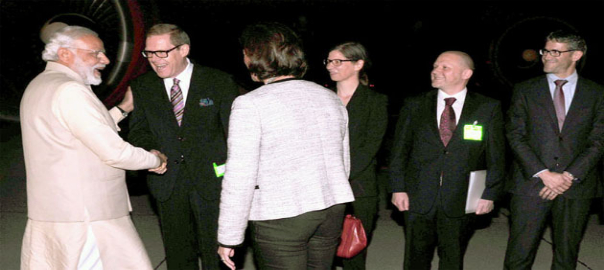
प्रधानमंत्री नरेंद्र मोदी कतर में अपना कार्यक्रम पूरे होने के बाद स्विट्जरलैंड के जिनेवा पहुंच गए हैं। प्रधानमंत्री का विमान यहां देर रात करीब 3 बजे (भारतीय समयानुसार) जिनेवा में उतरा।
प्राधानमंत्री के जिनेवा पहुंचने पर विदेश मंत्रालय के प्रवक्ता विकास स्वरूप ने ट्वीट किया। उन्होंने लिखा, ‘बॉन सोएर जिनेवा! सुरम्य स्विस शहर में देर रात आगमन प्रधानमंत्री की यात्रा के तीसरे चरण की शुरुआत की निशानी।’
विदेश मंत्रालय के प्रवक्ता विकास स्वरूप ने ट्वीट किया, ‘नमस्कार जिनेवा, स्विट्जरलैंड के सुंदर शहर में कल रात आगमन के साथ ही प्रधानमंत्री की यात्रा के तीसरे पड़ाव की शुरुआत हो गई।’ मोदी ने पांच देशों की यात्रा से पहले स्विट्जरलैंड को यूरोप में भारत का अहम साझीदार बताया था।
उन्होंने कहा था, ‘मैं हमारे द्विपक्षीय एवं बहुपक्षीय सहयोग को और गहरा करने के लिए राष्ट्रपति जोहान श्नीडर अम्मान के साथ वार्ता करूंगा।’ मोदी ने कहा था, ‘मैं जिनेवा में प्रमुख उद्योगपतियों से मुलाकात करूंगा। हमारा एजेंडा आर्थिक एवं निवेश संबंधों को विस्तार देना होगा। मैं सीईआरएन में काम कर रहे भारतीय वैज्ञानिकों से मिलूंगा। भारत को मानवता की सेवा के लिए विज्ञान के नए पहलुओं की तलाश में उनके योगदान पर गर्व है।’ प्रधानमंत्री भारतीयों द्वारा स्विस बैंकों में जमा किए गए काले धन का मुद्दा भी उठा सकते हैं।
मोदी 48 सदस्यीय परमाणु आपूर्ति समूह में भारत की सदस्यता के लिए स्विट्जरलैंड के सहयोग की अपील कर सकते है क्योंकि वह इस समूह का अहम सदस्य है। मोदी यहां से अमेरिका और फिर मेक्सिको जाएंगे। इसके बाद वह भारत लौटेंगे।
अपने पांच देशों के इस दौरे से पहले, प्रधानमंत्री मोदी स्विट्जरलैंड को यूरोप में भारत का प्रमुख भागीदार बता चुके हैं। स्विटजरलैंड में प्रधानमंत्री नरेंद्र मोदी वहां के राष्ट्रपति जोहान स्निडर अम्मानन समेत स्विस नेतृत्व के साथ वार्ता करेंगे और ऐसी संभावना है कि वे स्विट्जरलैंड में भारतीयों के कालाधन का पता लगाने के लिए उनसे सहयोग मांगेंगे, जिसका वादा वे 2014 के लोकसभा चुनाव के दौरान कर चुके हैं।
सूत्रों के अनुसार, दोनों देशों के अधिकारी एक समझौते को अंतिम रूप देने पर काम कर रहे हैं जो कर से जुड़े मुद्दों पर सूचनाओं के स्वत: आदान प्रदान का मार्ग प्रशस्त करेगा। इसके साथ ही पीएम मोदी 48 सदस्यीय न्यूक्लियर आपूर्तिकर्ता समूह में भारत की सदस्यता के लिए स्विट्जरलैंड का सहयोग भी मांग सकते हैं।
इससे पहले कतर में प्रधानमंत्री ने गैस समृद्ध खाड़ी देश के नेतृत्व के साथ हवाला और आतंकवाद के वित्त पोषण पर रोक लगाने समेत विभिन्न मुद्दों पर चर्चा की। प्रधानमंत्री की स्विट्जरलैंड रवानगी से पहले विदेश मंत्रालय के प्रवक्ता विकास स्वरूप ने ट्वीट किया, ‘सलाम कतर। लाभप्रद यात्रा के बाद प्रधानमंत्री नरेंद्र मोदी अपनी यात्रा के तीसरे पड़ाव के तहत जिनीवा के लिए रवाना।’
मोदी ने स्विट्जरलैंड के लिए रवाना होने से पहले कहा, ‘यात्रा के दौरान जबर्दस्त गर्मजोशी और आतिथ्य के लिए कतर की जनता और सरकार के प्रति मेरा आभार।’ उन्होंने कहा, ‘मेरी कतर यात्रा में लाभप्रद और व्यापक चर्चा हुई जो एक मजबूत भारत कतर मित्रता के नए युग की शुरूआत करेगी।’ मोदी की दो दिवसीय कतर यात्रा के दौरान दोनों देशों ने हवाला लेन-देन और आतंकवादी गतिविधियों के वित्तपोषण पर अंकुश लगाने के लिए खुफिया सूचना साझा करने पर सहमति जताई।
दोनों देशों ने सात समझौतों पर हस्ताक्षर किए और व्यापारिक संबंध से आगे रणनीतिक निवेश की ओर बढ़ने का फैसला किया। प्रधानमंत्री ने यहां भारतवंशियों को भी संबोधित किया। स्विट्जरलैंड के बाद प्रधानमंत्री अमेरिका और फिर मैक्सिको जाएंगे।
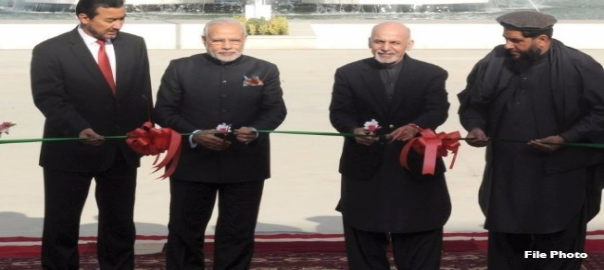
Prime Minister Shri Narendra Modi will jointly inaugurate the Afghan-India Friendship Dam (Salma Dam) with President of Afghanistan Dr. Ashraf Ghani in Herat province in Western Afghanistan tomorrow. Afghan-India Friendship Dam is a Multipurpose project planned for generating 42 MW of power, irrigating 75000 hectares of land, water supply and other benefits to the people of Afghanistan. Salma Dam is a landmark infrastructure project undertaken by Government of India on river Chist-e-Sharif, in Herat province of Afghanistan. The project is executed and implemented by WAPCOS Ltd., a Government of India Undertaking under ministry of Water Resources, River Development and Ganga Rejuvenation.
The project is located 165 km east of Herat town and connected with earthen road. Due to security reasons Indian engineers and technicians involved with the project have been reaching the site once in a month by helicopter service provided by Government of Afghanistan. All equipment and material were transported from India to Bander-e-Abbas port of Iran via sea and then along 1200 km by road from there to Islam Kila border post at Iran-Aghanistan border and then further 300 km by road from the border post to the site. Cement, steel reinforcement, explosives etc. were imported to Afghanistan from neighboring countries. The gross capacity of the Dam is 633 Million M3. The height of the Dam is 104.3 Mt, length 540 Mt and width at the bottom is 450 Mt.
The project is funded by Government of India. The successful completion of the project represents culmination of years of hard work by 1,500 Indian and Afghan engineers and other professionals in very difficult conditions.
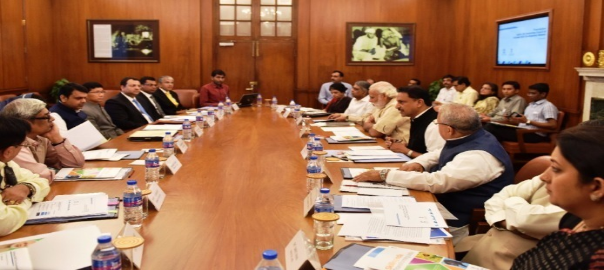
The first meeting of the Governing Council of the National Skill Development Mission (NSDM) was held under the Chairmanship of Hon’ble Prime Minister of India, Shri Narendra Modi on 2 June 2016.
In his remarks at the meeting, the Prime Minister stressed on the need for proper skill mapping and identification of the future requirements for skills, so that school-children and parents are well aware of the emerging trends in the job market. Further, he said a similar exercise should also be done to map the skilled manpower requirements at the global level, so that India can meet the global requirement of skilled workforce.
emphasized the importance of imbibing safety norms and soft skills as integral parts of skill development.
The meeting was attended by Chief Ministers of Maharashtra, Arunachal Pradesh and Jammu and Kashmir; Shri Rajiv Pratap Rudy, Minister of State (Independent Charge) Skill Development and Entrepreneurship; Smt Smriti Zubin Irani, Minister of Human Resource Development; Shri Kalraj Mishra, Minister of Micro, Small and Medium Enterprises and Shri Ravi Shankar Prasad, Minister of Communication and Information Technology. Senior bureaucrats, and corporate leaders, including, Shri Cyrus P. Mistry, Chairman, Tata Group; Shri Sachin Bansal, Founder and CEO Flipkart’ and Shri Manish Sabharwal, Chairman and Founder, Team Lease Services also participated in the Governing Council meeting.
Some of the major decisions taken at the meeting included the following:
· Skill training to be scaled up to cover at least 1.5 crore people during 2016-2017.
· The Central Board for Skills Certification to be set up by September 2016 to infuse quality into India’s skill development ecosystem.
· Unutilized infrastructure in existing engineering colleges to be leveraged for skill training courses.
· Profit making Public Sector Units (PSUs) will be mandated to scale up apprenticeships, upto 10% of total manpower, over the course of this year. Private corporations are also expected to follow suit.
· 500 Pradhan Mantri Kaushal Kendras, which will provide skill training free of cost to be opened this year, to impart training to India’s aspiring youth.
· 50 Overseas Employment Skill Training Centres to be opened this year, in migratory pockets of the country.
· 500 Rozgar Utsavs will be held across Industrial Training Institutes (ITIs), Central Training Institutes, PMKVY training centres, toolrooms etc., to make skill training aspirational amongst youth.
· A national skills competition, known as ‘India Skills’ will be launched during 2016-2017, to recognize the skills of India’s youth. This will be an annual event.
· This year, a national level Convocation will be held for candidates who successfully complete ITI courses, to recognize their success.
· Over the next one year, the capacity of ITIs to be further enhanced from 18.5 lakhs to 25 lakhs and over 5000 new ITIs will be created.
· Traditional skills will be recognized, nurtured and promoted through informal apprenticeships, under various programmes.
Background
65% of Indians are under the age of 35. By 2025, almost 1 in 5 of the world’s working age population (18.3%) will be Indian. In order to leverage India’s demographic dividend and prioritise skill development, a dedicated new Ministry for Skill Development and Entrepreneurship (MSDE) was set up, for the very first time, by the newly elected NDA government in November 2014 to steer and coordinate skill development efforts. Skill India is anchored within this new Ministry.
MSDE inherited a highly fragmented ecosystem. 21 Central Government Ministries and departments were implementing over 50 skill training programmes, operating in silos. Conflicting norms between schemes, poor monitoring mechanisms, varying assessment and certification systems and the absence of a coherent vision of success, limited the effectiveness of these initiatives. While there were previous attempts to consolidate this ecosystem through centralised organisations such as the National Skill Development Coordination Board or the Prime Minister’s National Council of Skill Development, 2008 – the fact that multiple bodies existed under different organisations and the lack of focus on execution, made these institutions ineffective.
MSDE has made great strides in a relatively short span of time. Within just six months, key organizations in the skill training and entrepreneurship ecosystem were brought under the Ministry. In just 8 months, MSDE created a National Policy for Skill Development and Entrepreneurship, which articulated an overarching vision to boost the skills development and entrepreneurship ecosystem in India and designed the India’s first National Skill Development Mission to coordinate and scale up skill training efforts. Both these policy initiatives were formally launched by the Hon’ble Prime Minister on 15 July 2015.
The Mission seeks to converge, coordinate, implement and monitor skilling activities on a pan-India basis. It brings key the stakeholders under the Central Government and the States together under one umbrella Mission with a three-tier structure, consisting of: the Governing Council for policy role, Steering Committee for coordination role and Mission Directorate (along with an Executive Committee) for execution. The Governing Council of the Mission is headed by the Hon’ble Prime Minister of India, and is guided by his vision of a ‘Skilled India’.
Skill India has led to transformational change in India’s vocational training ecosystem. Over the last one year, over 1.04 crore youth have been trained under the Mission. This figure is 36.8% higher than the previous year’s recorded data. In the current arrangement, 60% of the trainings are directly under MSDE while 40% are across other Central Ministries. MSDE’s Flagship Scheme, Pradhan Mantri Kaushal Vikas Yojana (PMKVY), which was launched on July 15, 2015 by the Hon’ble Prime Minister, has trained more than 20 lakh people, of which 40 per cent are women candidates, being trained in their choice of skills.
Speed, Scale, Standards and Sustainability are the four core principles of the NSDM. The first Governing Council Meeting was aimed to review the progress undertaken under the Mission on each of these core principles and sought to discuss a concrete agenda for rapidly scaling up skill training efforts, while maintaining high standards.
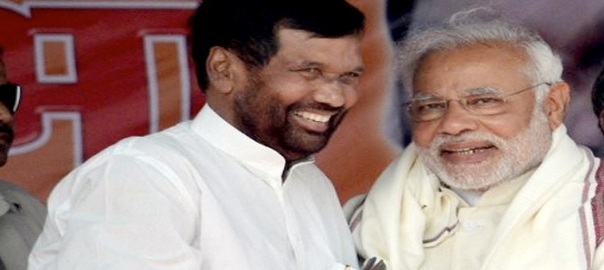
जम्मू: कांग्रेस अध्यक्ष सोनिया गांधी की ओर से प्रधानमंत्री नरेंद्र मोदी को ‘शहंशाह’ करार दिए जाने वाले बयान को लेकर उन पर कटाक्ष करते हुए केंद्रीय मंत्री राम विलास पासवान ने कहा कि ‘उनको (कांग्रेस) चिंता करने की जरूरत नहीं है क्योंकि मोदी अगले 15 साल तक प्रधानमंत्री बने रहेंगे।
पासवान ने यहां संवाददाताओं से कहा, ‘नरेंद्र मोदी अगले 15 साल के लिए प्रधानमंत्री बने रहेंगे। उनको (कांग्रेस) इस बारे में चिंता करने की जरूरत नहीं है।’ उन्होंने कहा कि मोदी के बारे में इस तरह की शब्दावली का इस्तेमाल करना उचित नहीं है क्योंकि देश की जनता ने उनको जनादेश दिया है। पासवान ने रॉबर्ट वड्रा की संपत्ति के मुद्दे और सोनिया गांधी के बयान के बारे में पूछे गए कई सवालों के जवाब नहीं दिए।
The plan aims to make India disaster resilient and reduce loss of lives
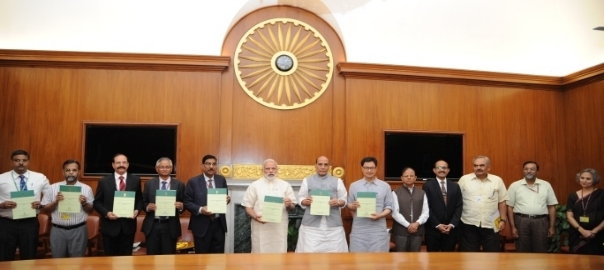
Prime Minister Shri Narendra Modi today released the National Disaster Management Plan (NDMP). This is the first ever national plan prepared in the country.
It aims to make India disaster resilient and significantly reduce the loss of lives and assets. The plan is based on the four priority themes of the “Sendai Framework,” namely: understanding disaster risk, improving disaster risk governance, investing in disaster risk reduction (through structural and non-structural measures) and disaster preparedness, early warning and building back better in the aftermath of a disaster.
Salient Features of the Plan
The plan covers all phases of disaster management: prevention, mitigation, response and recovery. It provides for horizontal and vertical integration among all the agencies and departments of the Government. The plan also spells out the roles and responsibilities of all levels of Government right up to Panchayat and Urban Local Body level in a matrix format. The plan has a regional approach, which will be beneficial not only for disaster management but also for development planning.
It is designed in such a way that it can be implemented in a scalable manner in all phases of disaster management. It also identifies major activities such as early warning, information dissemination, medical care, fuel, transportation, search and rescue, evacuation, etc. to serve as a checklist for agencies responding to a disaster. It also provides a generalized framework for recovery and offers flexibility to assess a situation and build back better.
To prepare communities to cope with disasters, it emphasizes on a greater need for Information, Education and Communication activities.
Minister of Home Affairs Shri Rajnath Singh, Minster of State for Home Affairs Shri Kiren Rijiju, and senior officers of the Prime Minister’s Office, Ministry of Home Affairs and National Disaster Management Authority were present during the function.
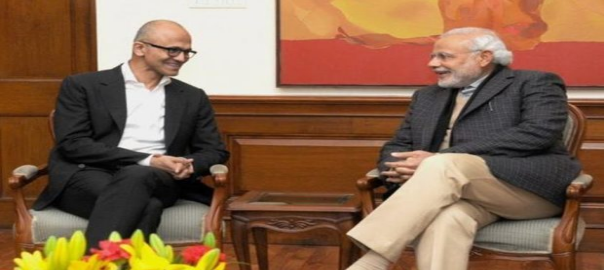
माइक्रोसाफ्ट के प्रमुख सत्य नाडेला ने सोमवार को यहां प्रधानमंत्री नरेंद्र मोदी और कुछ अन्य मंत्रियों से मुलाकात की।
माइक्रोसाफ्ट के प्रमुख सत्य नाडेला ने सोमवार को यहां प्रधानमंत्री नरेंद्र मोदी और कुछ अन्य मंत्रियों से मुलाकात की। इस बैठक में आइटी क्षेत्र से संबंधित मुद्दों और डिजिटल इंडिया जैसी पहल में भागीदारी बढ़ाने पर चर्चा हुई। भारत में जन्मे नाडेला ने फरवरी, 2014 में माइक्रोसाफ्ट के मुख्य कार्यकारी (सीईओ) का पद संभाला था। उसके बाद से वह तीसरी बार भारत आए हैं।
उन्होंने मोदी के अलावा संचार व आइटी मंत्री रविशंकर प्रसाद, वित्त राज्यमंत्री जयंत सिन्हा और कई शीर्ष उद्यमियों व साफ्टवेयर विकासकर्ताआें से मुलाकात की। मोदी ने बैठक के बाद ट्वीट किया- नाडेला के साथ आइटी क्षेत्र से संबंधित कई मसलों पर विचार किया।
लेकिन इसमें बैठक के ब्योरे का खुलासा नहीं किया गया है। नाडेला से पहले ऐपल के सीईओ टिम कुक चार दिन की भारत यात्रा पर आए थे। अपनी भारत यात्रा के दौरान कुक ने मोदी के अलावा आइसीआइसीआइ बैंक की प्रबंध निदेशक व सीईओ चंदा कोचर, टाटा समूह के चेयरमैन साइरस मिस्त्री और भारती एअरटेल के चेयरमैन सुनील मित्तल से मुलाकात की थी। नाडेला और कुक दोनों ने सरकार की डिजिटल इंडिया और स्टार्टअप इंडिया जैसी पहल को समर्थन की पेशकश की है।
इससे पहले दिन में नाडेला ने प्रसाद के साथ इस बात पर विचार-विमर्श किया कि डिजिटल इंडिया पहल में माइक्रोसाफ्ट के योगदान को किस तरह विस्तार दिया जा सकता है। हैदराबाद में जन्मे नाडेला ने सीआइआइ के कार्यक्रम में उद्योग के कार्यकारियों के साथ भी बैठक में हिस्सा लिया। इस सत्र में इन्टेल के बिक्री व विपणन उपाध्यक्ष और दक्षिण एशिया के प्रबंध निदेशक देवजानी घोष, आइएलएंडएफएस के चेयरमैन रवि पार्थसारथी, विप्रो के अध्यक्ष व सीईओ भानुमूर्ति बीएम और एनआइआइटी के सीईओ राहुल पटवर्धन ने हिस्सा लिया।
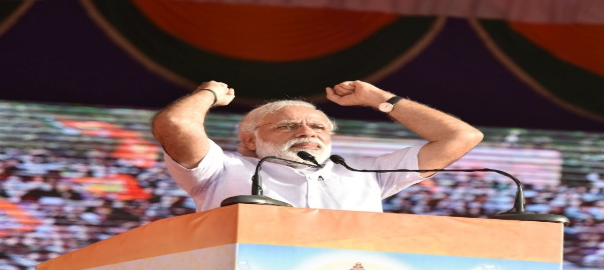
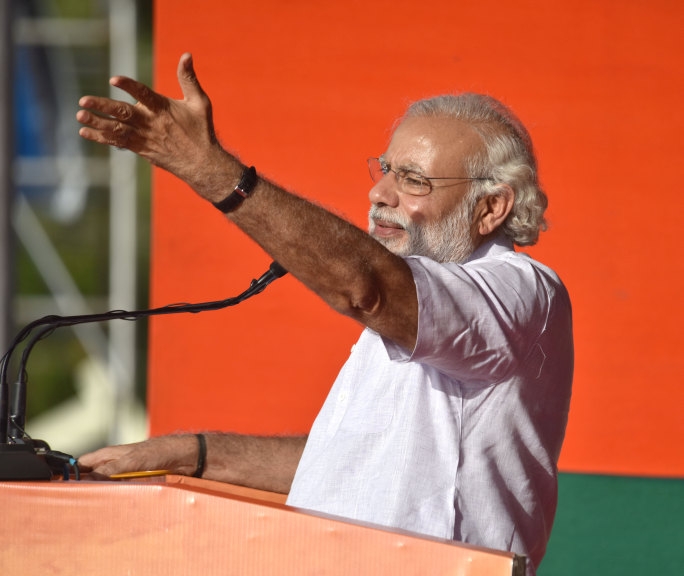
Prime Minister Narendra Modi today addressed a massive Vikas Parv Rally in Davangere, Karnataka to mark two years of the NDA Government in office. Beginning his address, Shri Narendra Modi thanked people of Karnataka for having turned out in large numbers to attend the rally. The Prime Minister highlighted several initiatives of the NDA Government in the last two years that were transforming the lives of people across India.
PM Narendra Modi said that the NDA Government was working tirelessly for the welfare of people across the country and India was now moving rapidly on the path of progress. “Our strength has been devoted for the welfare of the people”, he added further.
Taking a dig at the previous govt he said it is better for me to do small tasks as the big tasks of the previous govt resulted in big scams. Talking about an honest and transparent government PM Modi said, “We will never let the nation go in the wrong direction.”
The Prime Minister elaborated about Government’s initiatives towards welfare of the agriculture sector and the farmer community. He spoke at length about several schemes like Krishi Sinchai Yojana, Soil Health Cards, e-NAM and e-mandis that were benefiting the farmers in a big way. PM Modi also talked about steps the Government was undertaking for welfare of sugarcane farmers across the country.
Speaking about the Government’s ambitious Swachh Bharat Abhiyan, PM Modi credited the citizens for success of the initiative and said that people from all walks of life not only were appreciating but also contributing to the campaign.
He also cited about the ‘Give It Up’ campaign that turned out to be a mass movement as over a crore people gave up their LPG subsidies voluntarily. Adding further, the PM spoke about Ujjwala Yojana that aimed to make rural India smoke-free by providing gas connections to five crore to below poverty line households free of cost in next three years.
Prime Minister Modi also cited that India was a youthful nation and Government was undertaking efforts to direct the youthful workforce for development of India. He highlighted how initiatives like Skill India were helping India’s youth focus on their skills. The PM also mentioned about the recent decision of elimination of interviews for class 3 and 4 government jobs.
Several BJP leaders were present at the event.
In this scorching heat, you have turned up in such large numbers. That too at a time when polls are not close: PM @narendramodi in Karnataka
प्रधानमंत्री श्री नरेंद्र मोदी जी की अगुवाई में बनी भाजपा सरकार ने अपने 2 वर्ष पूरे कर लिए हैं जो पूर्ण रूप से देश हित में सफल नज़र आ रहे हैं। भाजपा सरकार के 2 वर्ष के कार्यकाल को लोग काँग्रेस के 40 वर्षों से ज़्यादा के कार्यकाल से बेहतर मान रहे हैं । इन कार्यों पर एक कार्टूनिक विडियो बना है ।
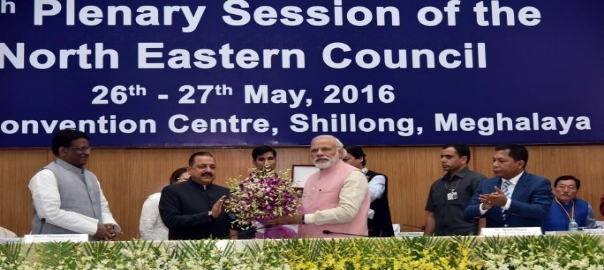
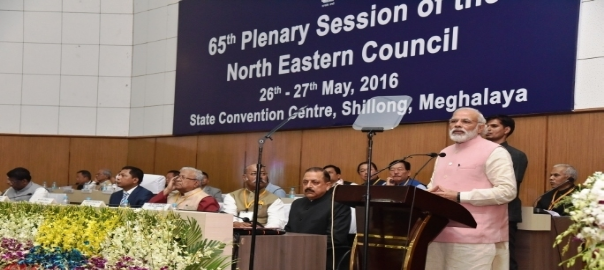
I am very happy to be here for the North Eastern Council Plenary meeting. I also take this opportunity of welcoming you all to this meeting. I hope that the deliberations that have already taken place since yesterday and further deliberations that we have today, will help in faster development of this region.
I am also happy to note that the North Eastern Council has provided support in the development of the North East region. It has been instrumental in establishment of a number of institutions and taking up infrastructure projects in the region.
he North Eastern Council was set up in 1972. Since then it has contributed to the development of the North East region. To meet the growing aspirations of the people, it is important that the North Eastern Council introspects and assesses the extent to which it has been able to achieve its objectives. Perhaps, there is a need to re-orient and upgrade the North Eastern Council. You may like to consider developing the North Eastern Council as a state-of-the-art resource centre for the North Eastern states with the necessary resources, knowledge and skills. The resource centre may enable the states and the implementing agencies to properly plan and execute projects, promote research and innovations and provide strategic policy vision for the region.
The North Eastern Council may look into developing a specialised domain expertise either by itself or through an agency model to assist states and central ministries in their development planning as also problem solving needs. This will enable the imbibing of good governance and best practices in the region. The North Eastern Council should also consider focussing on issues in emerging areas of livelihood, entrepreneurship, venture funds, start-ups and skill development. All this will help in generating jobs.
The government has been focussing on the development of the North East region through its pro-active “Act East Policy”. As part of this policy, we are focussing on reducing the isolation of the region by improving all round connectivity through road, rail, telecom, power and waterways sectors.
If the western region of the country can develop, if other regions of the country can develop, I see no reason why the North East region of the country cannot develop. I am also convinced that India can move forward if all the regions develop including the North East region. The North East region is also very important to us for strategic reasons. And it is my conviction that we have to bring this region at par with the other developed regions of the country.
In the current Budget, more than Rs.30,000 crores have been earmarked for the North East region. It should be our endeavour to ensure that this money is spent well for the development of the region.
We believe in cooperative and competitive federalism. States that are strong and want to grow further, need to be given adequate authority and resources. And States that are not so strong, need to be given needful assistance. It is in this regard that based on the report of the Committee of Chief Ministers, we have decided to continue to provide assistance in the ratio of 90:10 for core Central schemes and 80:20 for non-core schemes to the North Eastern States.
In the recent past, we have established two important projects in Assam – Brahmaputra Cracker and Polymer Limited and Numaligarh Refinery Limited’s wax unit. These are big projects that would create huge employment opportunities in the North East region. However, it has taken us many years to complete these projects. We have to ensure that we are able to complete our projects in time and without cost over-runs. Only then can we realise the true benefits of these projects.
The North East is the gateway to South East Asia and we need to take advantage of this. We are opening up both road and rail routes to our neighbouring countries. This should give a boost to the economic development of the region.
We have created a specialised highways construction agency for the North East – the “National Highways and Infrastructure Development Corporation” – that was incorporated on 18th July 2014. Since then it has set up its Branch Offices, one each in every North Eastern State. As of today, it is implementing 34 projects in the North Eastern States covering a length of 1001 kilometres at a total cost of over Rs. 10,000 crore.
In the road sector, we need to keep in view the special land and weather conditions of this area. Most of the North East areas get a lot of rainfall and are also prone to natural calamities and land-slides. We thus need to be careful in using appropriate technologies in the construction of roads in this area.
We have recently implemented an improved internet connectivity project for the North East region in collaboration with Bangladesh. This will make available 10 GB of seamless alternate bandwidth for the region. This integration will benefit the North East region tremendously.
The Government is also making a heavy investment in power transmission projects covering all the eight North Eastern states at a cost of around Rs 10,000 crore. This would ensure power to more areas. The recent commissioning of Bishwanath-Chariyali-Agra transmission line has also brought 500 MegaWatt additional capacity to the region.
The railways have undertaken a major expansion in the region at a cost of around Rs 10,000 crore. In November 2014, Arunachal Pradesh and Meghalaya were put up on the rail map. Agartala in Tripura has also been connected with broad gauge line. We are on the way to ensure that all the North East states come on the rail map soon.
In the North East, the Indian Railways has commissioned about 900 kilometres of Broad Gauge in the last two years, leaving only about 50 kilometres Meter Gauge lines to be converted in 2016-17. In addition, a 132 kilometre part of third alternative connectivity route to North East (that is New Maynaguri – Jogighopa) has also been commissioned.
There are a number of strengths of the North East which we need to harness for healthy growth of the region. All the states of the North East region are blessed with natural scenic beauty, distinct historical cultural and ethnic heritage. All this offers tremendous scope for tourism in the region. There is also a great scope for mountaineering, trekking and adventure tourism in the region. If developed and promoted well, this can emerge as the biggest employer in the region. It can also add to the growth and income of the region.
I understand that the Ministry of Tourism has identified a thematic circuit for the North East region. I hope that the North Eastern states will make the best use of the scheme to develop tourist circuits and attract tourists from all over the world. The region can also look into combining a few popular destinations of the neighbouring countries with their tourism circuits. This will be an added attraction for tourists.
The majority of youth of the North East region is English speaking. With improved connectivity and language skills, you may look into setting up of the BPO industry in the region.
The Government has approved North East BPO promotion scheme in the Digital India programme for creation of employment opportunities. The North East States must avail facilities and get these BPOs operationalized in their respective States. This will promote growth and provide jobs to our youth.
The North East is home to exotic fruits, flowers, vegetables, aromatic plants, and herbs. Most of them are organic in origin. If we focus our development strategy on organic farming, it would help the region greatly.
A few months ago, I was in Sikkim and participated in a function to declare Sikkim as the first organic state in the country. Other States can take a lead from Sikkim and the North East Council can also play an important role in the development of organic farming in the region. The North East can become the organic food basket for this country. Organic products are going to be increasingly used widely and if the North East Council can assist the states in the region to take a lead in this area, it will contribute immensely to the income of the people and the region.
There is a large rural population in the North East region. If we talk of Assam alone, 86% of the population lives in rural areas. We have initiated the Shyama Prasad Mukherjee Mission to bring in economic, social and basic development of the rural areas in a cluster model. It should be the endeavour of the region’s states to make use of this mission for the development of the rural areas.
In the end, I would like to express my gratitude to the chairman and all the members of the North Eastern Council for successfully conducting the plenary meeting in Shillong.
My special thanks to the Governor and the Chief Minister of Meghalaya for hosting this meeting. I am sure that the deliberations in this meeting will go a long way in providing direction to the development of the region. Thank you.